Why Your Kitchen Sink Keeps Clogging in Enid — Grease Coating the Pipe, Not One Clog
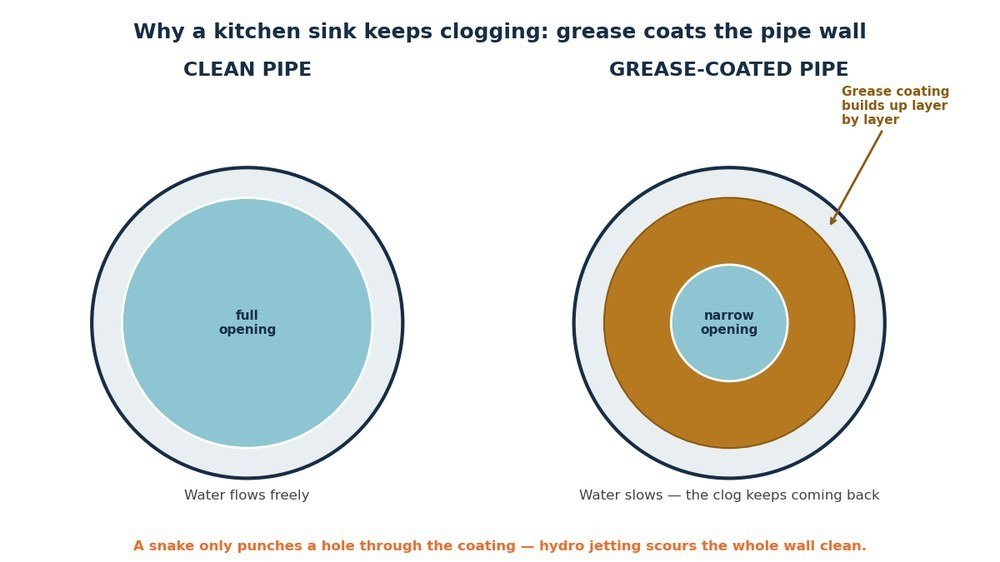
Why does my kitchen sink keep clogging? In most Enid kitchens, the answer is grease coating the inside of the pipe, not one single plug. Hot grease goes down as a liquid, cools along the branch line, and sticks to the pipe wall — layer after layer, until the opening is too narrow for water to pass freely.
That is why the clog keeps coming back: the pipe wall itself is coated, and until the coating is cleaned off, the clog will return. If that sounds familiar — a sink that drains slowly, clears briefly, then slows again — you are asking why does my kitchen sink keep clogging, and the coating is the answer. Our Kitchen Drain Cleaning page explains how a kitchen line is cleared.
How does grease clog a kitchen sink?
Grease is fats, oils, and grease — FOG — from cooking: pan drippings, butter, bacon fat, meat juices, and the thin oil left on plates and pans. It goes down hot and liquid, so it feels harmless. Then it cools, hardens, and clings to the pipe. The sticky layer catches what comes next — food scraps, coffee grounds, soap scum, rice that swells in water — and each layer narrows the pipe a little more, until the sink fills up while you wash dishes and takes minutes to empty.
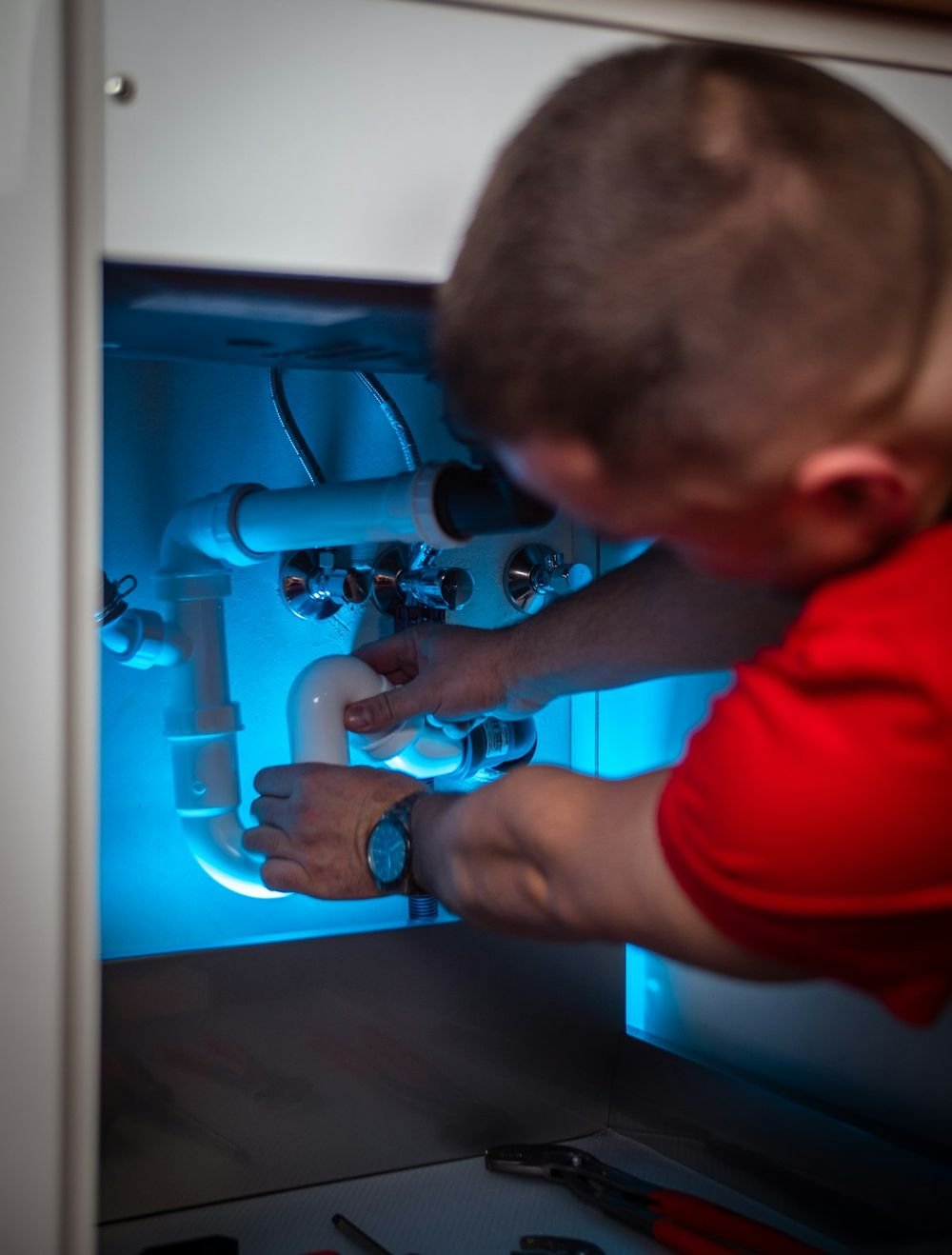
The P-trap — the U-shaped bend under the sink that holds water to block sewer smells — makes it worse. Grease settles in that bend first, because the water there is still and cool, then spreads into the branch line, the pipe from the sink toward the main sewer line.
Grease cools as it travels down the branch line and coats the inside of the pipe — a snake only punches a hole through it, it does not clean the wall.
How do I tell a grease clog from something else?
Not every slow kitchen sink is a grease clog, and the fix depends on the cause.
| What you see | Most likely cause | What it means |
|---|---|---|
| Sink drains slowly, a little worse every week | Grease coating the pipe wall | The opening is narrowing; needs full-wall cleaning |
| Sink stopped suddenly after food went down | Food plug in the P-trap or branch line | A single blockage; a trap clean or a snake may clear it |
| Sink and dishwasher both back up, or other drains gurgle too | Main sewer line problem | The blockage is past the kitchen line |
| Disposal hums but the sink will not drain | Disposal jammed or clogged line | Turn the disposal off; do not run it on a clogged line |
| Sink smells bad but drains at normal speed | Grease and food rotting in the trap | The trap needs cleaning, even though water still flows |
One detail matters most: if only the kitchen sink is slow, the problem is in the kitchen line. If the bathroom drains or the toilet are slow at the same time, the problem is further down, in the main sewer line.
What can I try first at home?
Three safe steps are worth trying, in this order. Stop if the water rises close to the rim of the sink.
1. Plunge with the other basin sealed. If you have a double sink, seal the second basin with a wet cloth or a stopper, then plunge the clogged side. Without the seal, the pressure escapes through the other basin and the plunge does nothing. Ten firm plunges, then lift and check whether the water moves.
2. Clean the P-trap. Put a bucket under the U-bend, unscrew the trap, and empty it. Grease and food collect here first, and a trap full of sludge is often the whole problem. Rinse it, check the washers, and refit it firmly. If the trap is cracked, leave it and call — a leaking trap is worse than a slow one.
3. Flush with hot tap water. After the trap is clean, run hot tap water — not boiling water — for two to three minutes. It softens a thin grease layer and carries loose debris away. This is maintenance, not a cure: it will not dissolve a thick coating built up over months.
If the sink drains well, keep it that way: scrape grease into the trash and use a strainer. If it slows again within days, the coating is still on the wall further down the line, past where you can reach.
What does not work on a grease clog?
Chemical drain cleaners. They sit on top of the blockage and generate heat, can damage the trap and joints, and leave a caustic liquid in the sink for whoever clears the line next. They do not strip grease off a pipe wall.
Boiling water poured down the drain. Boiling water can soften PVC pipe and its glued joints, and it only reaches the grease nearest the sink. Hot tap water is safe; boiling water is not worth the risk.
Running the garbage disposal on a clogged line. The disposal is not a drain cleaner. Running it when the line is blocked pushes food and grease harder against the clog and can jam the disposal itself. If the sink will not drain, turn the disposal off.
Pouring more grease down to "flush it through." The new grease cools and adds another layer to the coating. Grease belongs in the trash, in a jar or a sealed container, never in the sink.
When does the line need full-wall cleaning?
The test is time. If a kitchen sink clogs, clears, and clogs again within a few weeks, the line needs its walls cleaned, not just a hole punched through the blockage. That is the difference between snaking and hydro jetting: snaking punches a hole through a plug and restores flow, which fits a single food plug or a first clog that has never returned; hydro jetting uses high-pressure water to scour the whole inside of the pipe wall, which is what a grease coating that keeps coming back needs. A camera inspection comes first on an older or fragile line, because jetting a cracked pipe makes things worse. Our Hydro Jetting page explains how full-wall cleaning works.
Stop and call if water rises close to the rim, the sink backs up into the dishwasher, other drains slow down too, or the clog returns within days. Those signs mean the problem is past the trap and past a home fix.
For Enid restaurants: a short note on grease traps
A commercial kitchen grease trap is a box, usually under the sink or outside, that catches grease before it reaches the sewer. When it is full, kitchen drains slow the same way a home sink does. This is informational only — if you run a restaurant in Enid and the drains keep slowing, check the trap first.
In Enid
Enid’s older homes, especially near downtown and the Broadway Tower area, often have older kitchen lines with mineral scale already narrowing the pipe. Grease and scale harden together: the scale gives the grease something rough to grip, and the grease seals the scale in place. That is why a kitchen sink in an older Enid home can keep clogging even when the household is careful — and why the fix is to clean the wall, not just the hole.
Frequently asked questions
Why does my kitchen sink keep clogging after snaking?
Because snaking only punches a hole through the grease coating — it does not clean the pipe wall. If the clog returns within a few weeks, the line needs full-wall cleaning, which is what hydro jetting does.
What dissolves grease in a drain?
Hot tap water softens a thin layer, and a clean P-trap removes the grease nearest the sink. Nothing you pour down the drain dissolves a thick coating built up over months, and chemical cleaners can damage the trap and joints.
Can I put grease down the garbage disposal?
No. The disposal chops food; it does not remove grease. Grease poured into a running disposal still cools and coats the pipe further down the line. Scrape grease into the trash and keep a strainer in the sink.
Is a slow kitchen sink an emergency?
Not on its own — a slow sink is a warning, and the cheapest time to fix it. It becomes urgent if water rises close to the rim, if the sink backs up into the dishwasher, or if other drains slow down at the same time.
How do I keep grease out of my kitchen drain?
Scrape plates and pans into the trash, wipe greasy pans before washing, pour used cooking oil into a jar and throw it away once it cools, and use a sink strainer. A monthly hot-water flush helps a clean pipe stay clean.
Not sure which drain is the problem? See all drain cleaning services in Enid, OK.
Call and describe what your kitchen sink is doing — (580) 609-1338. Tell us whether it drains slowly, backs up, or keeps clogging after it was cleared — and whether any other drain is affected. Hours: 09:00–17:00 daily.